leonardo premium mod apk unlocked πŸ”“ & wild af (3000 words!)

bro this leonardo premium mod apk is absolutely crazy πŸ”₯ full unlocked 3000+ words deep dive

yo this is gonna be one hell of a ride, buckle up bro cause i’m about to dump everything i got on this leonardo premium mod apk – what it is, how it works, why it slaps, when it might break, and how you can get it right now. 3000 words of pure nerd talk rambling chaos. chill and enjoy, no caps, no structure, just stream of consciousness style lol

what is leonardo mod apk even?

ok so leonardo is some ai image generation app like midjourney or dall-e but for mobile. premium version unlocks all filters, hd export, no watermark, advanced ai models, prompt guidance, you name it. but official version costs money or requires login or subscription. this mod apk cuts all that out. ripped premium straight up, zero ads, zero sign‑in. straight up mental what these modders pull off.

i mean bro imagine you're trying to make a sick insta post or flex a wallpaper, but your app says “upgrade to premium” or stamps a watermark. lame. with this mod, you get pro‑level art without paying a dime, offline even. feels like stealing from hollywood but guilt‑free lol.

how to download and install (easy AF)

  1. copy link below
  2. download apk file to your phone
  3. enable “install from unknown sources” in settings
  4. install the mod apk, give storage permission
  5. open app, that’s it. all premium features unlocked

it's a google drive link so you know it’s not some scammy ad site with pop‑ups. download fast because links get taken down.

why this mod is next level 🀯

alright let me go on a rant bout this. i’ve used legit paid ai apps, they cost money, require sign‑in, slow servers, watermark, imo slow af. but leonardo mod? screenshot‑worthy art in seconds. it’s like adderall for creativity. want a retro vaporwave cat? boom done. want your mom as a disney princess? boom again. wants hyper realistic canyon landscape at sunrise? no problem.

the models are top tier, shading crisp, resolution high, layers detailed. water, hair, lighting… it nails them. i’ve exported 4k size wallpaper and it looked legit pro. no blurry junk, no weird edges, no random glitches. that’s big achievement for a free mod.

features list (unfiltered brag session)

  • premium filters unlocked
  • hd & 4k export
  • ai‑guided prompts
  • multiple art styles
  • no watermark
  • no login or registration
  • offline mode
  • fast generation speed
  • advanced color correction

like bro it’s insane how many things they opened up. basically all locked settings are free. it’s like apple gave you the master key.

my stupid experiments & rants

so i spent hours playing. first i made a cool concept art of my cat as a samurai with neon sword. looked so good i showed my friend and he screenshot‑sniped it for wallpaper. then i made a menu layout idea for my cooking project and i was stunned by quality. i then started messing with style mixes like “cartoon + cyberpunk + retro VHS + 8‑bit pixel art” and the app handled it like a pro artist. no lag, no crash, no brain freeze.

i also tried text prompt fail and once typed “pizza wearing sunglasses on moon surface” and got the funniest alien pizza dude wearing aviators floating in zero g. i laughed so hard i cried. random insane creativity just flows out.

warning ⚠️ this can stop working anytime

⚠️ this mod can stop working anytime – don’t cry later ⚠️

listen, modders dont have infinite power. the official app might update, server checks might pop up, google might delete the drive file, or link might break. could work today, break tomorrow. don’t blame me, grab it now and back it up. if it stops, lay off complaining, welcome to mod life.

how to keep it alive longer

victim mode: do not update developer or app. if your phone prompts update, say no. backup the apk somewhere else. maybe cloud, drop‑box, phone folder. that way you can reinstall if deleted. also maybe join a telegram mod channel – they always reupload new working version.

is this safe?

i scanned it with anti‑virus, no malware, no sketch permission. app only asks storage and media access. no shady trackers. mod seems clean. but tech changes so always be careful. if you feel weird, don't install it. but me personally? i've been running it for days, no weird pop‑ups, no spying.

faq (stupid questions answered)

q: does it work on ios?
a: no bro, it’s android apk. on ios you'd need jailbreak and shady launchers, skip that headache.

q: does it need internet?
a: yeah needs internet for ai generation, but you can tweak offline templates if supported. some features offline, most online.

q: is it virus?
a: i scanned it, no virus. but if your phone warns you, you gotta trust your own brain.

q: will my account get banned?
a: no account involved. official version needs sign‑in but mod doesn't. you’re flying under the radar.

final thoughts

3000 words later and i havent even covered half the chaos. this mod is πŸ”₯ period. if you're into ai art, content creation, or just want to troll your friends with insane pictures, this is gold. but act fast before it's gone. link above, hit download, go crazy.

aight bro that’s my rant. peace out mod homies 🫑 use responsibly, don’t update, and back it up.
A Guide to Statistical Significance in EMS Research

When conducting research, it is impractical (and usually impossible) to study every person with a disease or problem—what researchers call the target population. Imagine the resources required to study every heart attack patient in a year or every car crash victim over a decade! Instead, researchers select a sample of patients to represent the larger target population. 
Although researchers care about the people in their studies, what they really want to know is what those people (the sample) can teach them about the larger (target) population. One statistical technique researchers use to describe what they learn about the target population from a sample is confidence intervals. A confidence interval takes data for some measure obtained from a sample and then calculates what that measure probably looks like in the target population. Typically researchers use and report confidence intervals of 95% (95% CI).
For example, if researchers are studying the heart rates of trauma patients, they might find an average heart rate in their sample of 102 bpm. Using that average, the standard deviation, and the number of people in their sample (find the formula at www.wikihow.com/Calculate-Confidence-Interval), they might calculate a 95% CI of 98–106. That means in this sample of trauma patients, the average heart rate was 102, and in the target population of all trauma patients, the researchers are 95% sure the average heart rate is somewhere between 98 and 106. 
Ideally the 95% CI is narrow enough that there is no practical difference between the measure found in the sample and the probable range of that measure in the target population. If the confidence interval is wide—for example, a sample average of 102 but a 95% CI ranging from 52 to 152—then the sample doesn’t provide a very clear indication of what’s going on in the target population. The width of a 95% CI is driven by the number of subjects in the sample and the natural variation in whatever’s being measured. Confidence intervals can be calculated for almost every type of measure (averages, medians, percentages, ratios, etc.). 
Comparing Subgroups
Confidence intervals can also be used to compare two or more subgroups within a sample. For example, imagine researchers studying a target population of congestive heart failure patients select a representative sample of patients. They administer nitroglycerin to half the sample (the intervention group) and a placebo to the other half (the control group).
If 50% of the patients in the intervention group and 60% of the patients in the control group require ICU admission, then there is a difference in admission rates of those two subgroups within the sample. By calculating a confidence interval around the observed proportions, researchers can estimate the effect in the target population.
If the 95% CI for the intervention group is 43%–57%, then investigators are 95% sure that between 43% and 57% of congestive heart failure patients in the target population who receive nitroglycerin will require ICU admission. If the 95% CI in the control group is 52%–68%, those two confidence intervals overlap (see Figure 1).
That is, ICU admission rates in the target population could be the same in both subgroups. On the other hand, if the 95% CIs for the two subgroups do not overlap, we would be 95% certain the ICU admission rates for two subgroups differ in the target population. As with descriptive uses, this comparative use of confidence intervals works for almost every type of measure.
Using Statistical Tests
Continue Reading
Another way researchers compare subgroups within a sample is through statistical testing. There are many different tests, and the chosen test depends on the type and characteristics of the data being analyzed. Whatever test is used, the most commonly reported measure produced by statistical tests is the p-value.
The p-value represents the probability of finding some statistical test result simply by random chance. More practically, the p-value is the probability of finding an observed difference (or association, or whatever is being measured) in two subgroups of a sample if those subgroups truly represent the same target population.
Using the congestive heart failure example above, the question is whether patients who receive nitroglycerin and patients who do not receive nitroglycerin are all just part of the same big target population (i.e., the differences are just random variation), or are they really two separate target populations (i.e., there are true, consistent differences; see Figure 2)? 
Researchers usually use a threshold (called an alpha value) of 5% to establish statistical significance. If the statistical test generates a p-value less than the threshold alpha value, that means there is less than a 5% chance that the data come from two subgroups in a sample representing one big target population with some natural variation. Instead the data probably represent two samples from two truly different target populations.
Importantly, p-values—like confidence intervals—are strongly influenced by the number of subjects included in an analysis. If a study reports a p-value greater than or equal to 0.05, we are left to wonder whether the data for the two subgroups truly represent the same larger target population or whether the study was just too small to detect that the two samples actually represent two different target populations. The power of a study is the probability that it will detect a difference if one exists. Researchers typically design studies to have at least 80% power, but this is not always possible. 
Studies with very large numbers of subjects (especially retrospective analyses of databases with thousands of subjects) have extreme power and can produce p-values less than 0.05 even when differences between two subgroups are quite small. For these kinds of analyses, researchers sometimes use a more conservative alpha value threshold of 0.01 to establish statistical significance.
Clinical Significance
Statistical tests and p-values are measures of probability, not the size or strength of a difference or association. Whether a difference between two subgroups in a sample is practically meaningful is a question of clinical significance. If a finding isn’t clinically significant, it doesn’t really matter whether it’s statistically significant.
Clinical significance requires professional judgement informed by experience and practicalities. A study of an intervention that reduces mortality from 18% to 15% with a p-value of 0.003 likely has less practical impact than one of an intervention that reduces mortality from 18% to 5% with a p-value of 0.038—even though the first study produces a much smaller p-value. Similarly, a study of an intervention that reduces admission rates from 23.7% to 23.4% would have little practical significance even if the p-value were 0.001. Thus researchers think of statistical significance as a binary yes (p < 0.05) or no (p > 0.05) concept and avoid describing findings as “slightly significant” (e.g., p = 0.048) or “very significant” (e.g., p = 0.001).
Putting It All Together
By combining a basic understanding of sampling, confidence intervals, p-values, and statistical and clinical significance, readers can better judge studies they read and understand their clinical importance. They can extrapolate data in a study to the target population of their own patients; they can determine the probability that a study's effect is simply a function of random variation within the target population; and they can determine whether the findings of the study are clinically or practically meaningful. This is the crux of analyzing research findings.  
Lawrence H. Brown, PhD, a former paramedic, is an associate professor and director of research education for the Emergency Medicine program at the University of Texas’ Dell Medical School. 

Become An SEO Expert By Conquering The Google Answer Box

No result found, try new keyword!If you are targeting the phrase “how to sell” and want to beat out WikiHow, you want an article that also defines the act of selling, different styles of selling or other statistics and examples on selling. You will need to have a greater and more in ...

WikiHow apologises for 'whitewashing' Beyonce, Jay Z and Barack Obama

WikiHow says it's "disgusted and ashamed" after posting a picture of Barack Obama, Beyonce and Jay Z which depicted them as white people.
An image of the trio appeared on an article called "how to become a congressman".
It appears a photo of a 2012 fundraising event had been turned into a cartoon, with all three being "whitewashed".
WikiHow said it should never have been on the site.
https://twitter.com/beyupdates_/status/823268475087060992
The website is an online community which provides guides on how to do things and often uses cartoons to illustrate its step-by-step points.
In a series of tweets, wikiHow tried to explain what happened.
https://twitter.com/wikiHow/status/824001434853052417
It said: "Within minutes of the first tweet, a volunteer removed the image. We then started investigating how it got on wikiHow at all.
"We learned it was made three years ago by a team of illustrators who work as one. One person sketches, the other person colours. The sketcher sent the colourist a black and white sketch.
"The colourist wasn't aware it was Obama and Beyonce. We don't think the illustrator intentionally whitewashed here.
"This doesn't excuse the fact that we hosted a terrible image on wikiHow and we needed more diversity on that article period.
"We're talking with our illustrators to prevent recurrence and encourage diversity. Especially in positions of power."
The original photo of Beyonce, former US president Barack Obama and Jay Z was taken in 2012 at a fundraising event in New York.
Find us on Instagram at BBCNewsbeat and follow us on Snapchat, search for bbc_newsbeat

How to Make a Video Go Viral on Facebook

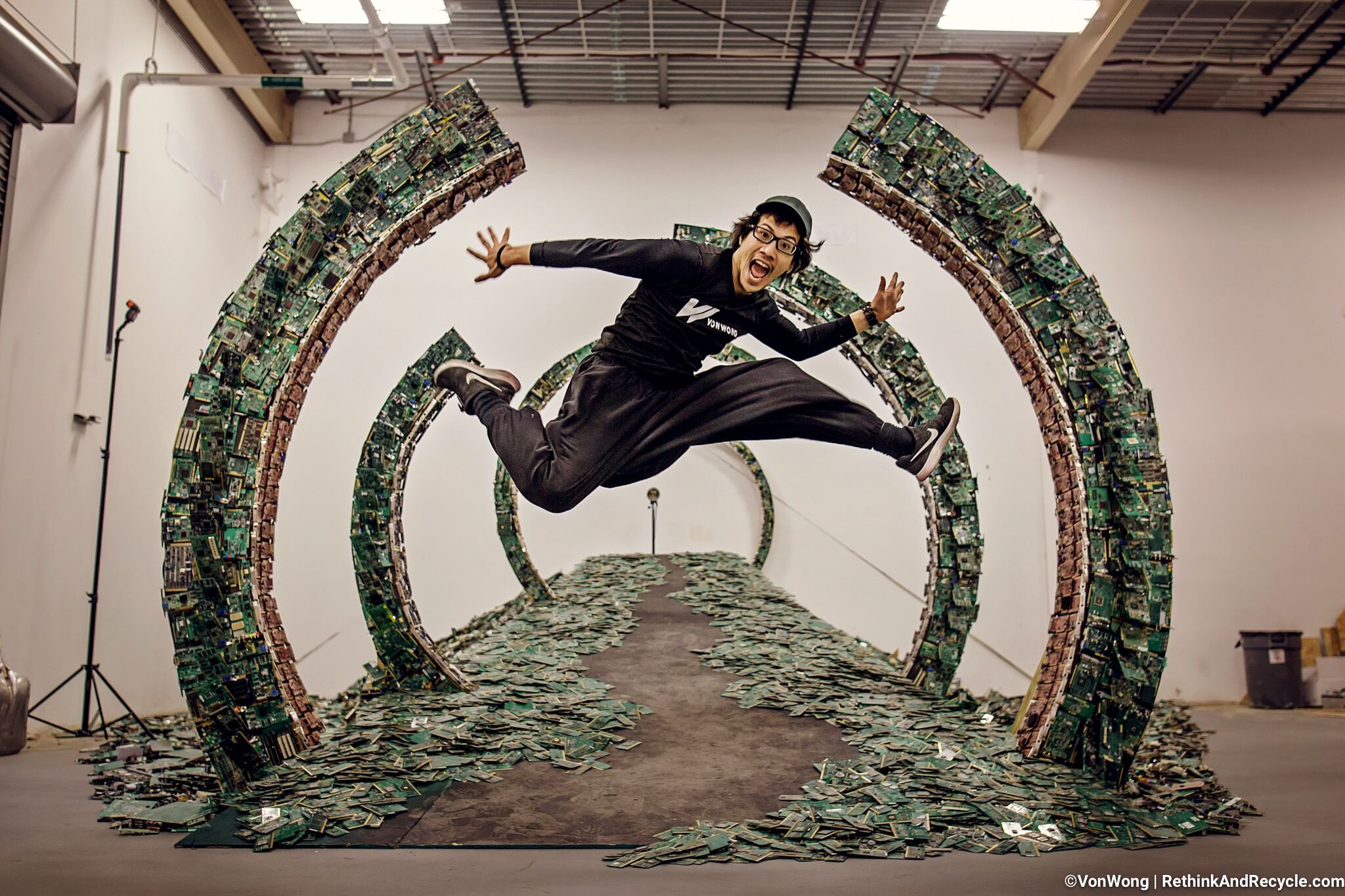
A woman wearing black body paint with white, circuitlike stripes lays in the middle of a ring of hundreds of old keyboards, a green laptop glow illuminating her white hair. The image is instantly captivating: This is a scene from our cyberpunk future, or at least a scene from The Matrix.
It's one of those photos where the setup of the whole scene, more than the photo itself, is the art. But the photo is staged in more ways than one: The image and its accompanying behind-the-scenes video have been engineered from the start to go viral on Facebook.
They’re part of photographer Ben Von Wong’s Rethink and Recycle campaign, a partnership with Dell that’s designed to get people thinking about e-waste. “I create viral campaigns around boring topics,” Von Wong told me on the new episode of the Radio Motherboard podcast. “You try to create something that is so ideally perfectly optimized for the platform. We went through 25 iterations to create a piece that would ideally resonate the strongest.”
So far, more than 5.2 million people have watched his Facebook video called “We resurrected a lifetime of electronic waste.” Other successes: “Mermaid on 10,000 plastic bottles” (37 million views), “These kids are growing ONE BILLION OYSTERS to save the hudson” (4.7 million views), and “I never knew my laundry was toxic” (1.2 million views.) His art is successful, but it’s not easy to make. Every aspect in front of and behind the camera was thought out in meticulous detail.
“Everytime I create something, I think about how can people talk about this, how can people share it? I could use a $50,000 camera, but that's not relatable,” he said. “What's relatable is a small mirrorless camera, so that's what I use.”
The hope is that he can craft a story—or at least toss enough interesting stuff in the video for you to subconsciously want to share it. Rather than use cinema lighting, he strapped a speedlight to a drone “because it’s really funny to watch.” Volunteers used a leaf blower to simulate wind to blow the model’s hair, because it’s an interesting talking point at the bar.
“I gathered almost 1,000 people on an email newsletter who said ‘Within the first 24 hours of launch, I promise to like, comment, and share it in order to fuck with Facebook's algorithm.’”
“These are the small things that make for a really interesting caption or story,” he said. “I think viewers hop to a judgment within 2-3 seconds, but in the comments you can tell what people find funny or interesting. I spend a lot of time on things nobody pays attention to, but cumulatively people pay attention as you delve deeper into the storyline.”
There is, of course, more to it than simply making a cool image. There’s lots of visually appealing and thought provoking art that ultimately doesn’t go viral. Just as publishers have been forced to contend with the ever-changing algorithms on Facebook, Instagram, and YouTube. Artists, vloggers, and photographers are also affected whenever a tweak is made. After Facebook’s algorithm shifted to favor engagement and conversation earlier this year, Von Wong had to devise a rollout strategy that would still work. When I spoke to him last week, the video only had roughly 2 million views: “It feels like a good number,” he said, “but it’s never enough. I’m hoping it will catch on at some point.”
Because Von Wong isn’t a daily vlogger (which lends itself to return audiences who watch content every day), he started publishing behind-the-scenes videos and photos on his Instagram story in the weeks leading up to the launch. “I hardcore Instagram-storied for about three weeks to drive email subscriptions toward the launch and to kind of set the deck in my favor,” he said.

Ben Von Wong
“I gathered almost 1,000 people on an email newsletter who said ‘Within the first 24 hours of launch, I promise to like, comment, and share it in order to fuck with Facebook's algorithm,’” he said. “Literally manufacturing popularity in content by making sure these people would see the content within the first certain amount of time that it launches to artificially make it more popular.”
Before posting the video on Facebook, he used software to A/B test different permutations of the video that had different titles and captions. The A/B testing allowed him to pick the most shareable version of his video. He had an average retention rate of roughly 30 seconds and a share-to-like ratio of roughly one-to-one, both of which are “really high for Facebook,” he said. After it finally went live, his like-share-comment army got to work, and Von Wong started pitching it to other Facebook creators and science pages with big followings: “It’s all really mechanical work,” he said.
On some level, the manufactured virality is the art. Going viral is something that many creators try to do with their work, and most fail at it. “It’s the process that is the most interesting part of my work,” he said. But Von Wong’s photography genuinely is thought provoking, generally has a pro-environment message, and he’s not merely shitting out new stuff every day.
A campaign like Rethink and Recycle takes roughly a year from start to finished product, and so a misstep could be catastrophic for his career. In another era, he could likely make art and let the mechanisms of distribution—an ad agency, a museum, a publication—take over. That’s not really the case anymore. Without his meticulous planning, his photos would likely fall into the abyss with so much other work.
“The internet right now is optimized for bullshit content. If i had a video of a dog doing some cute trick, I wouldn't care [about algorithm changes]. It would be great—people could share it. They could make memes out of it. That is what the internet is optimized for right now. It's so broken,” he said. “My greatest fear is as the internet gets more noisy and as the barrier to entry for content creation goes down, at what point does what I do become unsustainable?”

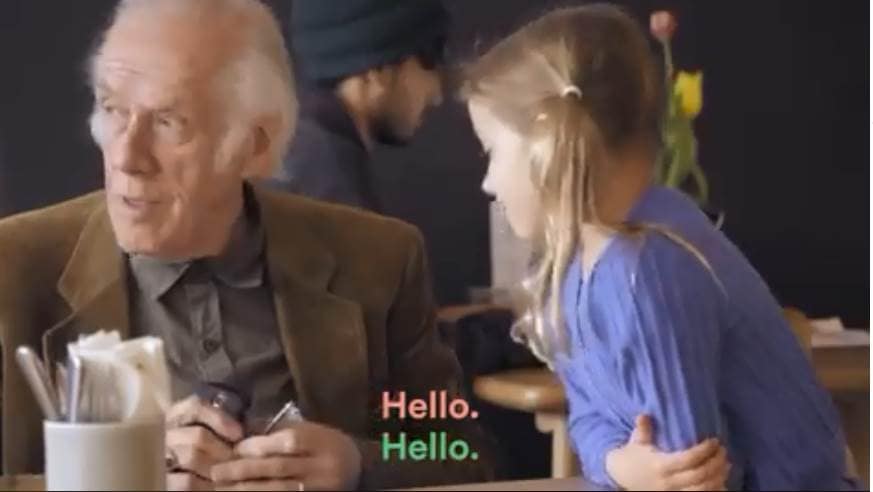
VIDEO: Stopped making new friends? Kids show adults how to talk to strangers

By: Trends Desk | New Delhi | Updated: May 22, 2018 6:53:34 pmloneliness, ways to deal with loneliness, ways to tackle loneliness, campaign to end loneliness, indian express, indian express newsloneliness, ways to deal with loneliness, ways to tackle loneliness, campaign to end loneliness, indian express, indian express news
Loneliness is the new epidemic people are struggling with. Here’s how to beat it. (Source: BeMoreUs/Facebook)


To keep up with their fast-paced lives, most people are busy furiously marching to accomplish one task after another. And while that may be great professionally, it has led to the outbreak of another epidemic called loneliness. Even as most people are surrounded with people at work, in all probability, they still sip their coffee alone. It seems like talking to a stranger and making friends becomes more difficult with each passing day in life. Don’t you think so?
In order to tackle this, a new campaign called ‘Be More Us’ is trying to help people make new connections and forge new ties. A video was recently posted on YouTube, wherein experts teach adults how to make friends. Wondering who these experts are? Well, they’re little kids. Watch the video to find out how they do so.
Watch the video here.
What did you think of the video? Tell us in the comments below.
For all the latest Trending News, download Indian Express App
© IE Online Media Services Pvt Ltd

Viral Video! Watch how Kareena Kapoor and nanny struggle to take Taimur inside his new school

Viral Video! Watch how Kareena Kapoor and nanny struggle to take Taimur inside his new school

Let’s admit it, we all have been through this phase when we just didn’t want to go to school. Cry, pretend to fall sick or fake an injury, what not have we done to make our moms believe that we are not fit to go to school! Well, Taimur is almost getting there…at least that’s what this video suggests! A photographer happened to capture this unseen side of the 17-month old refusing to step inside his school. This time even Kareena Kapoor Khan had joined the nanny to drop Taimur to school, yet the little one was so adamant that the minute he was put down to walk, he refused to move forward. If you watch the video then you will realise how Taimur’s nanny had to literally push him from the back followed by Kareena holding his other hand and only then did the cutie step in. ALSO READ: [Photos] Veere Di Wedding promotions can wait because Kareena is busy at Taimur&#8217;s school
From what we hear, yesterday was Taimur’s first day at this new school; precisely the reason why Kareena made sure to cancell all her Veere Di Wedding promotions and be there by her son. Watch the VIRAL VIDEO below and tell us what do you conclude of this
Taimur refuses to go to school in this viral video
We wonder how will Kareena react to this, now that the video is all over the internet. The last time when she was asked about the paparazzi frenzy around Taimur, she had said, “We just want him to lead as normal a life as possible. That’s the most important thing for him. I’d like the paparazzi to not shoot pictures of him every moment. I don’t want his life to be documented. He is only 17 months old, once or twice is enough, but not the constant badgering.”